
Minister Kono Participated in the G20 Digital Economy Ministers’ Meeting in 2022
- Published:
On September 1, 2022, the G20 Digital Economy Ministers’ Meeting was held in Bali, Indonesia, and Minister for Digital Transformation Kono attended the meeting.
At the G20 Digital Economy Ministers' Meeting, chaired by Indonesia, participants discussed digital connectivity and post-COVID recovery under the Indonesian G20 Presidency's overarching theme, "Recover Together, Recover Stronger." The discussions centered on three priorities: 1. Connectivity and Post-COVID-19 Recovery, 2. Digital Skills and Digital Literacy, and 3. Data Free Flow with Trust (DFFT) and Cross-Border Data Flows.
As participants were unable to reach a consensus at the Digital Economy Working Group (DEWG) meeting held prior to the Ministers’ Meeting, no Ministerial Declaration was adopted. A Chair’s Statement is expected to be issued at a later date by the Indonesian presidency.
Attendees included Minister for Digital Transformation Kono, State Minister for Internal Affairs and Communications Tsuge, and Parliamentary Vice-Minister for Economy, Trade and Industry Nagamine.
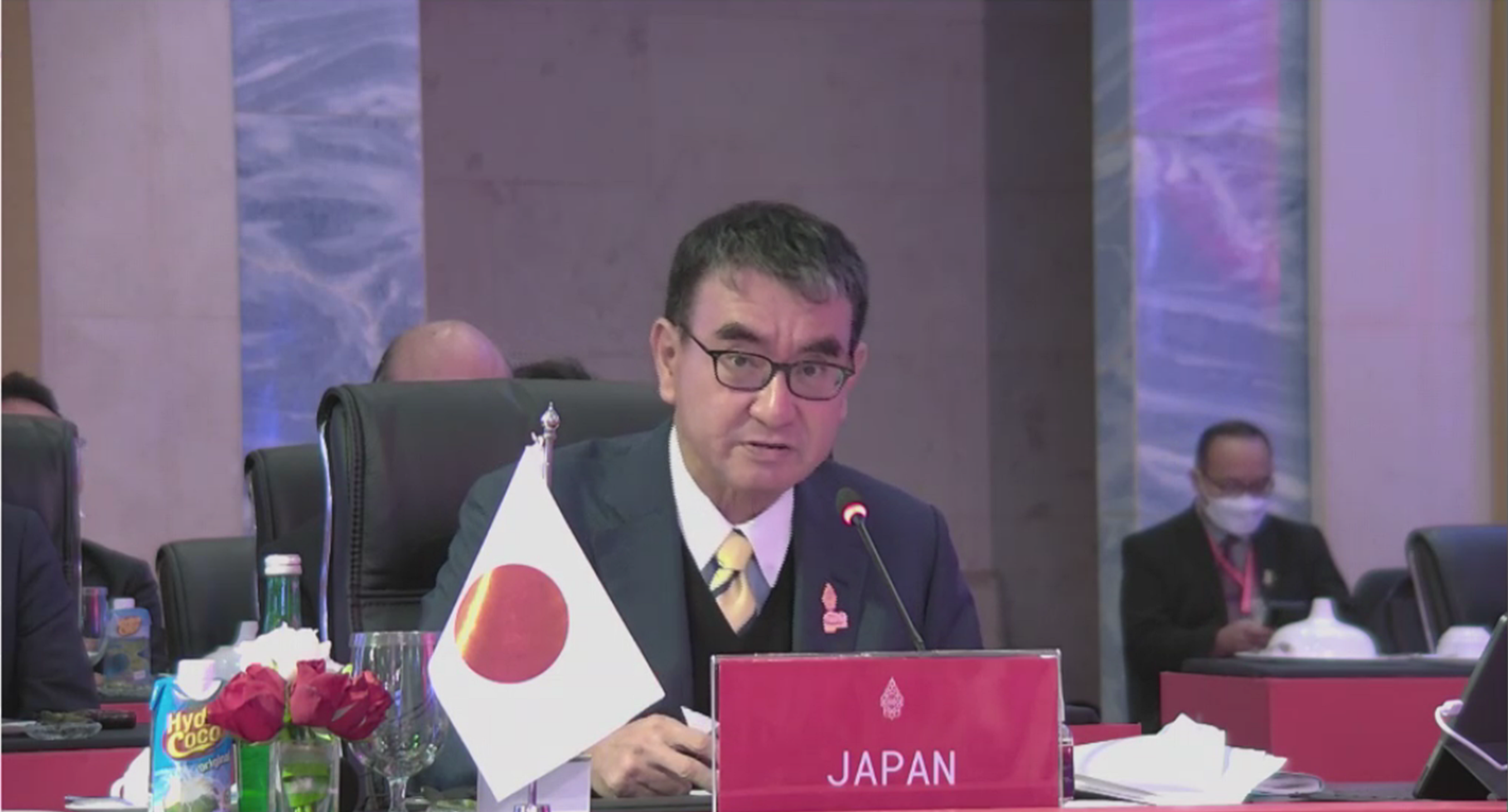
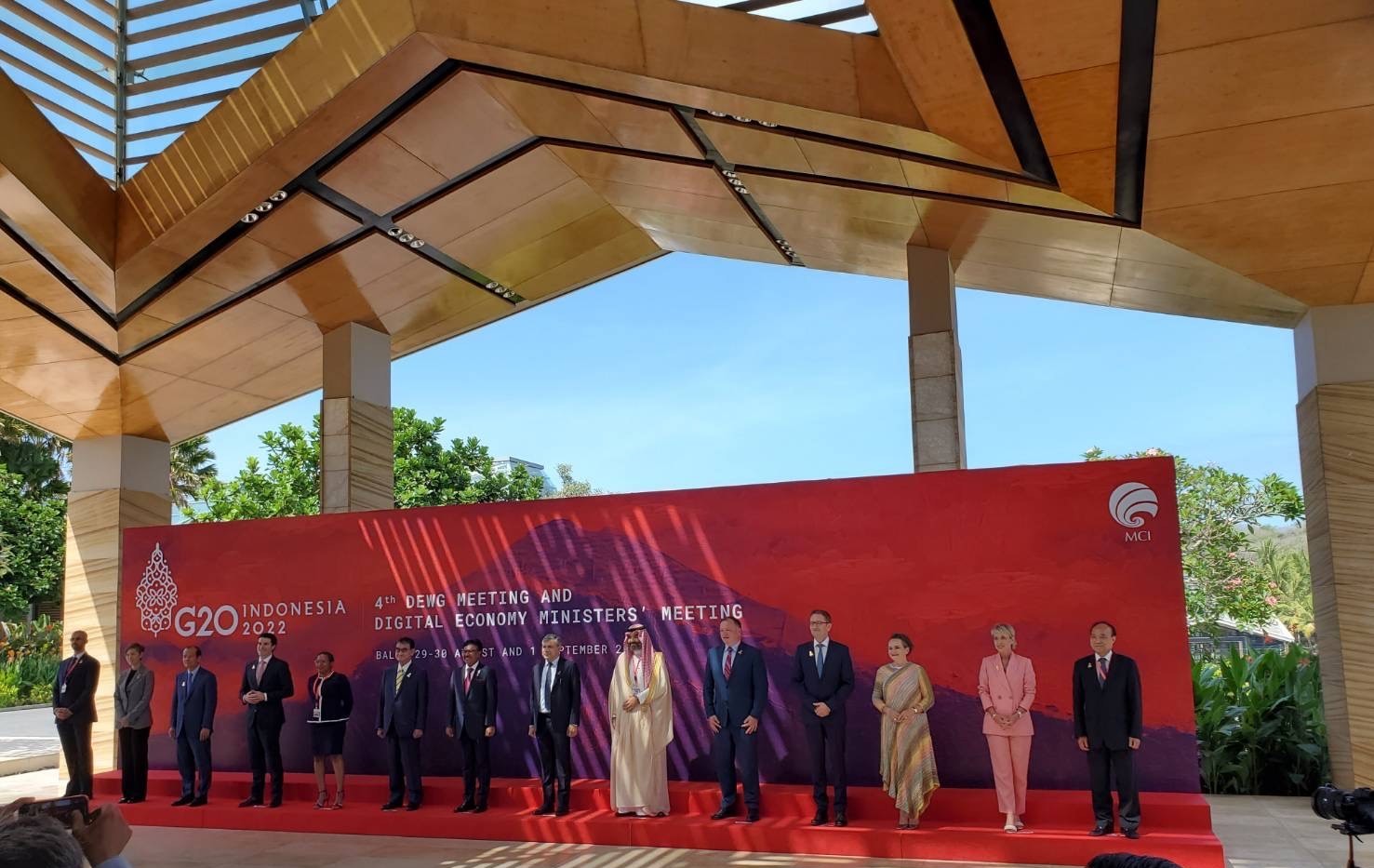
During the meeting, Minister Kono delivered a statement after the remarks by the previous Presidency (the Italian Republic) and the next Presidency (the Republic of India). This day marked exactly one year since the establishment of the Digital Agency. He provided an update on the status of digital policies currently being implemented in Japan. Citing the "Vision for a Digital Garden City Nation" and the "Provisional Commission on Digital Administrative Reform" as examples, he shared progress in collaboration between national and local governments and the digital transformation of society as a whole.
Minister Kono also presented Japan’s perspective on DFFT, first proposed by Japan at the 2019 Davos Forum and endorsed at the G20 Osaka Summit, in preparation for the 2023 G7 meetings. He stressed the need to build trust in DFFT and promote data utilization. He also highlighted the importance of improving interoperability among international regulations and frameworks, while respecting each country’s approach to data governance, to facilitate smooth cross-border data flows. By advocating for stronger international collaboration, he fostered mutual understanding and encouraged active discussion among participating countries.